

Amazon is backing what could be the largest natural gas power plant ever built in the United States.
The company confirmed to Cleanview that it has acquired a site in Pecos County, Texas, where it plans to build an AI data center campus powered by on-site natural gas generation. Permits for the gas plant reveal that it would use 35 turbines to generate up to 7.65 gigawatts of power1. It would be entirely disconnected from the Texas electricity grid — at least initially.
“Amazon believes in paying the full costs of powering our operations,” a spokesperson said in a statement. “Our new planned data center campus in Pecos County does just that: it’s powered by new on-site generation that won’t raise electricity costs for Texas families and designed to transition to grid-connected service as interconnection timelines allow.”
In January, GW Ranch received a permit from the state of Texas allowing the gas power plant to emit 33 million tons of carbon dioxide into the atmosphere. If the project emitted that much CO2, it would be the largest single source of pollution in the United States—emitting more greenhouse gases than the country’s largest coal plant. It’s worth noting that companies rarely emit as much as their permits allow.
Amazon said it remains committed to reaching net-zero carbon emissions by 2040 under The Climate Pledge. But the gas plant would put those goals further out of reach at a time when the company’s emissions are already rising quickly.
The company said it has enabled 10 GW of carbon-free energy across 40 projects in Texas to power its existing data center operations. Amazon said that its GW Ranch project will use non-potable, brackish groundwater—a source not suitable for irrigation or drinking water.
The paper trail linking Amazon to GW Ranch surfaced earlier this week when Amazon filed three construction permits with the state. The permits showed Amazon’s plans to build three data center buildings with construction beginning immediately. Cleanview reviewed satellite imagery to look for the project and discovered that land clearing had begun at the site described in GW Ranch’s air permit records.
We reached out to Amazon and the company confirmed it had acquired the GW Ranch site and plans to buy power from the plant.
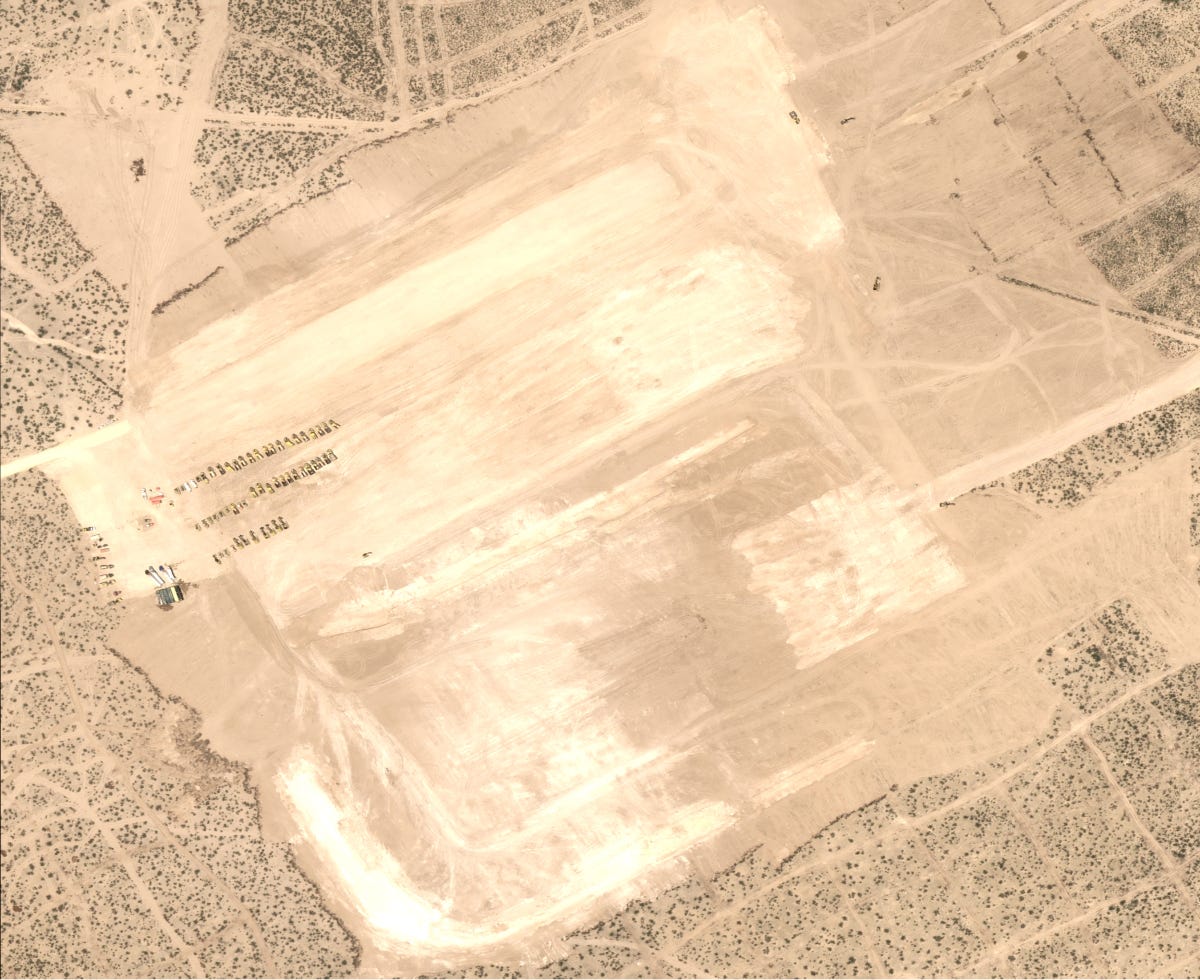
Partnering with GW Ranch marks Amazon’s first major investment in an off-grid data center. In doing so, the company joins Microsoft, Google, and Meta who have all invested significantly in natural gas power this year.
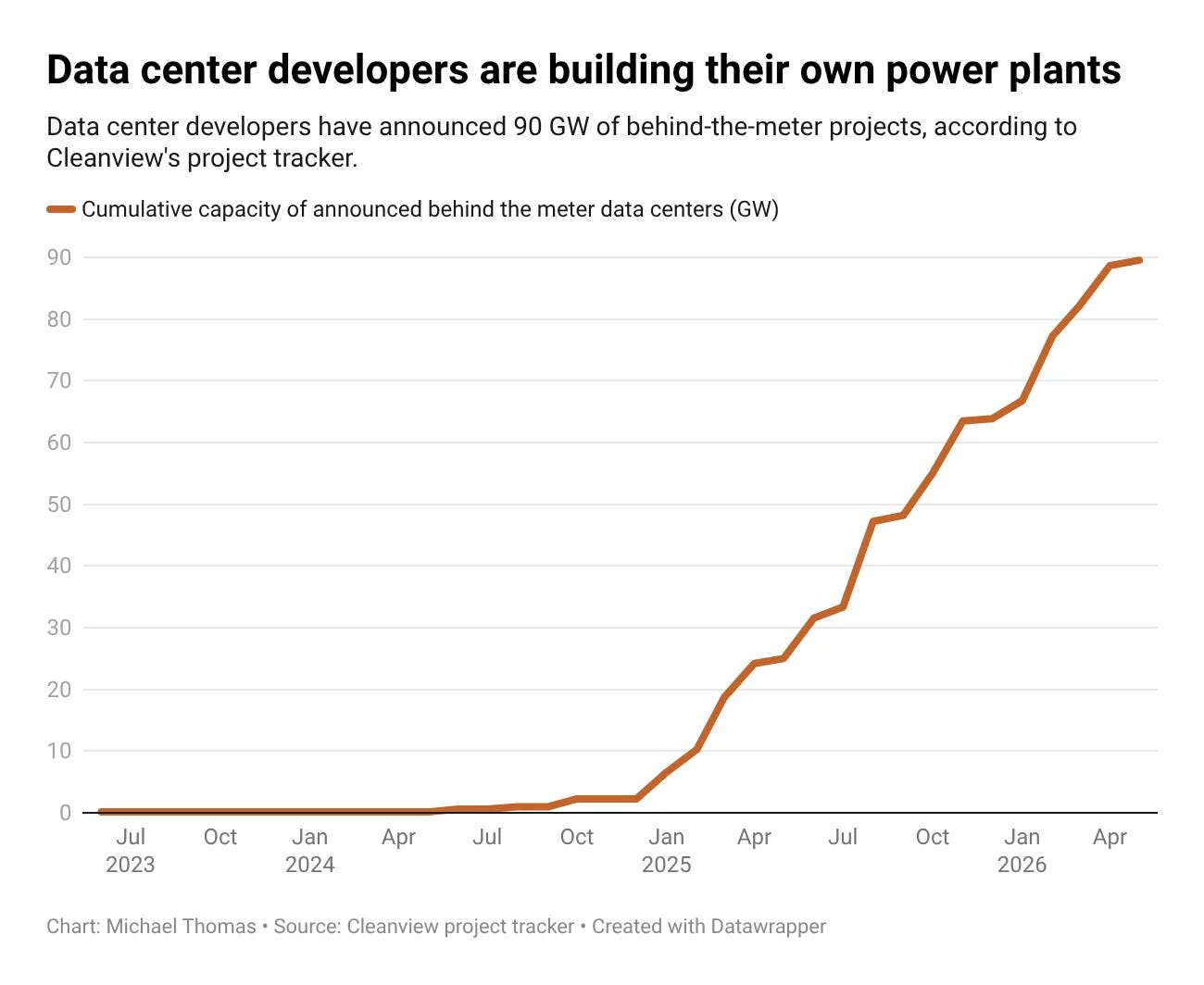
Data center developers have announced nearly 60 behind-the-meter gas power projects since the beginning of 2025 with a combined capacity of 90 GW, according to Cleanview’s latest report. Not all of these projects will be built, but in recent months a growing share of them have begun construction and signed key tenant deals.
In June, Microsoft announced that it had partnered with Chevron to build a data center campus near Pecos, Texas, that would be powered by 2 GW of off-grid natural gas. That project is located 30 miles west of GW Ranch.
Pacifico Energy has said it plans to build up to 750 MW of on-site solar generation and 1.8 GW of battery storage capacity at GW Ranch.
Prior to this year, Amazon had powered all of its data centers with grid power. But the AI boom is changing that. In a call with investors on July 30th, Amazon’s CEO Andy Jassy said the company’s cloud platform, AWS, grew at its fastest rate in 18 quarters due to AI demand. He added that the company has more demand for compute than it can supply with their data centers—a mismatch the company expects to persist well into next year.
Amazon’s project in West Texas is unlikely to be its last bet on large-scale natural gas power. Yesterday, the company confirmed that it is in talks with the developers of a 4.5 GW gas power plant in Homer City, Pennsylvania.
When the developers of the Homer City gas plant first announced their project, they said it would be the largest gas power plant in America. Now it’s just one of many giga-scale power plants that have been proposed across the country.
Read more about off-grid data centers
Cleanview recently published the most comprehensive analysis of behind-the-meter data centers available. We analyzed 59 behind-the-meter data center projects and the equipment powering them. The report includes detailed case studies of 15 projects with satellite imagery analysis, OEM market share breakdowns, and project timelines. It also includes the full dataset of projects and equipment.
You can read the full report on Cleanview’s website. We’ve released both a free summary and a ~75-page paid version with a dataset of all the projects. We’ve also published stories on this trend to our newsletter and website that you can find here:
Bypassing the Grid: How Data Center Developers Are Building Their Own Power Plants
Meta’s Data Center Strategy and the Mad Max Phase of the AI Boom
Clarification: Pacifico Energy, the original developer of the project, cites 7.65 GW in its press release about the air permit, the maximum combined nameplate capacity of the 35 turbines listed in the permit. But the permit also describes a nominal delivered output of 5 GW. The story has been updated to say “up to 7.65 gigawatts” to make clear that figure refers to nameplate capacity.
When we see these new "off-grid" power plants and they claim they are building them in order to ensure consumer power rates don't go up - that doesn't work. This may be a great example. It may become the largest Natural Gas power plant in the country. While it is new, and built to exclusively sell to the data center, it will be buying Natural Gas as an input - a lot of Natural Gas. That will necessarily have an impact on the price of Natural Gas on the market.
Even if a power plant is "isolated" from the grid, it is still part of a connected marketplace...
Have you ever looked at the total amount of input materials for these new off-grid power plants and how their demand may impact the larger market and thus flow thru to driving up power costs at grid-connected plants? Are they significant enough in scale to impact the market, independently or collectively?
Long term nuclear is the answer for clean, reliable power. Likely Amazon plans to build nuclear plants and transition away from natural gas by 2040... at least that would be interesting to see how they plan that far out.