

Earlier this year, I published a report about data center developers who were building their own power plants. For all the hype about the trend, there was little documentation of how these massive facilities would get built. So I reviewed hundreds of permits, regulatory filings, and other documents to try to understand their plans.
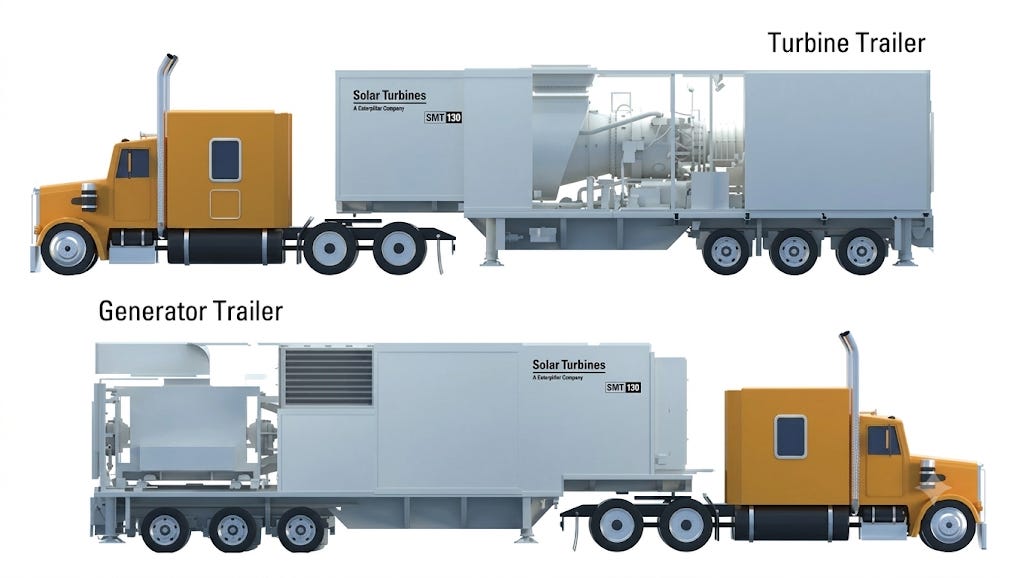
What I found was surprising. Rather than wait for a grid connection, some developers were planning to stick gas turbines on the back of semi-trucks and park them outside their data centers. Other developers planned to use repurposed jet engines that once powered Boeing 747 airplanes.
That report received a lot of attention. It was covered by dozens of national media outlets, including The New York Times, Axios, Politico, and NPR. The US Senate asked me to brief them on the trend and subsequently launched a probe into many of the companies I identified in the report.
Today I’m releasing an updated version of the report. My main goal in writing this second version was to answer what I thought was a straightforward question: How many of these behind-the-meter data centers are actually getting built? It turns out that’s not an easy question to answer.
Every week it seems like someone announces a new “world’s largest off-grid data center” project. Last year, it was Fermi America’s Project Matador. Early this year, it was Pacifico Energy’s GW Ranch. More recently, it was TV celebrity Kevin O’Leary’s Wonder Valley.
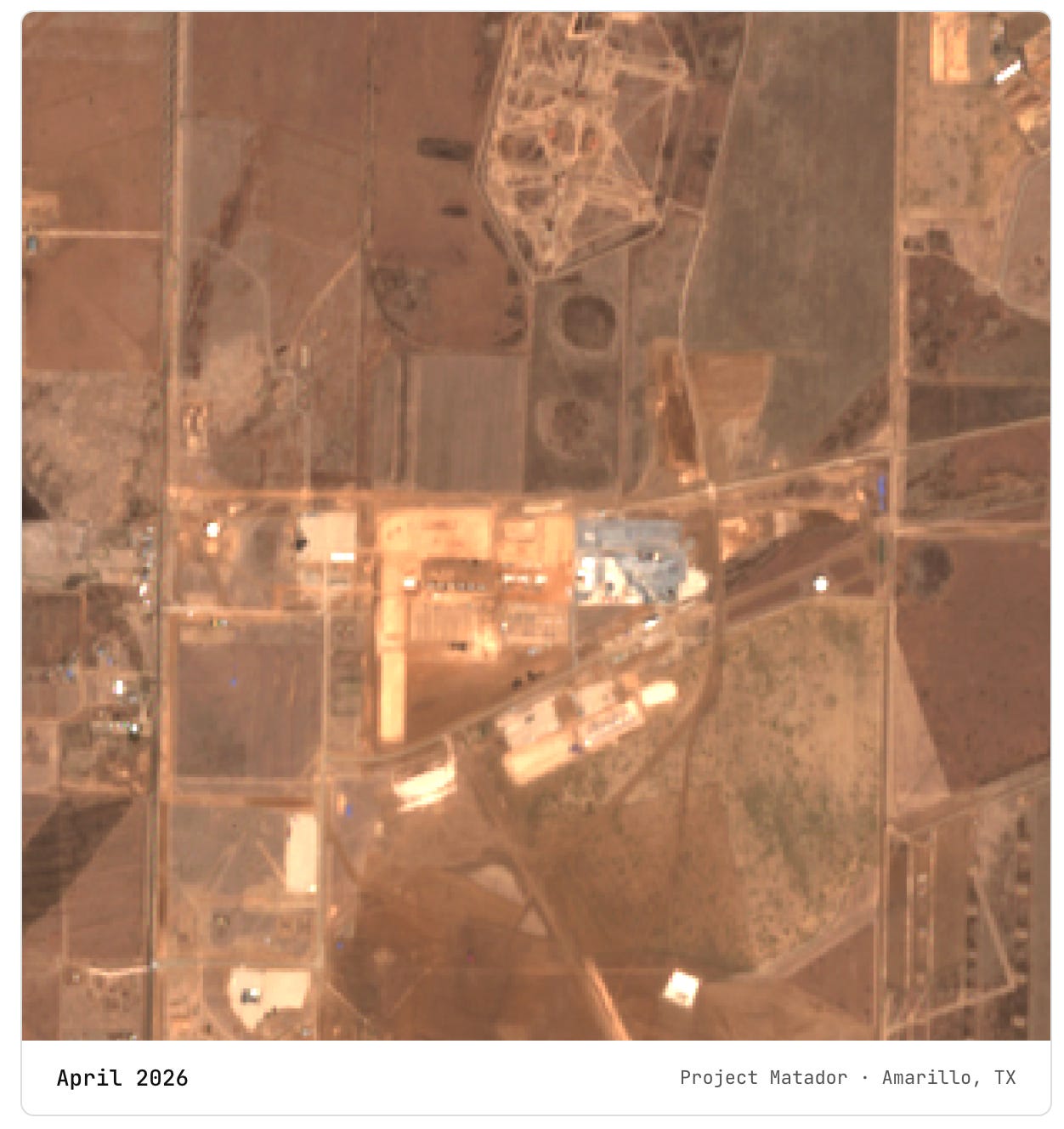
But the difference between press releases and reality on some of these projects can be significant. Fermi America writes on its website that Project Matador is under construction. But satellite images reveal a different story. There hasn’t been noticeable construction activity on the site for months because Fermi still hasn’t signed a tenant. Without a tenant, it can’t raise the money required to build the project. Without any money, there can be no “world’s largest private power grid.”
Some analysts have argued that Fermi is evidence that the whole behind-the-meter trend is nothing but hype. Others have argued that none of these behemoths are ever going to get built. But this dismissal overlooks the projects that have already been built and the ones that are actively under construction.
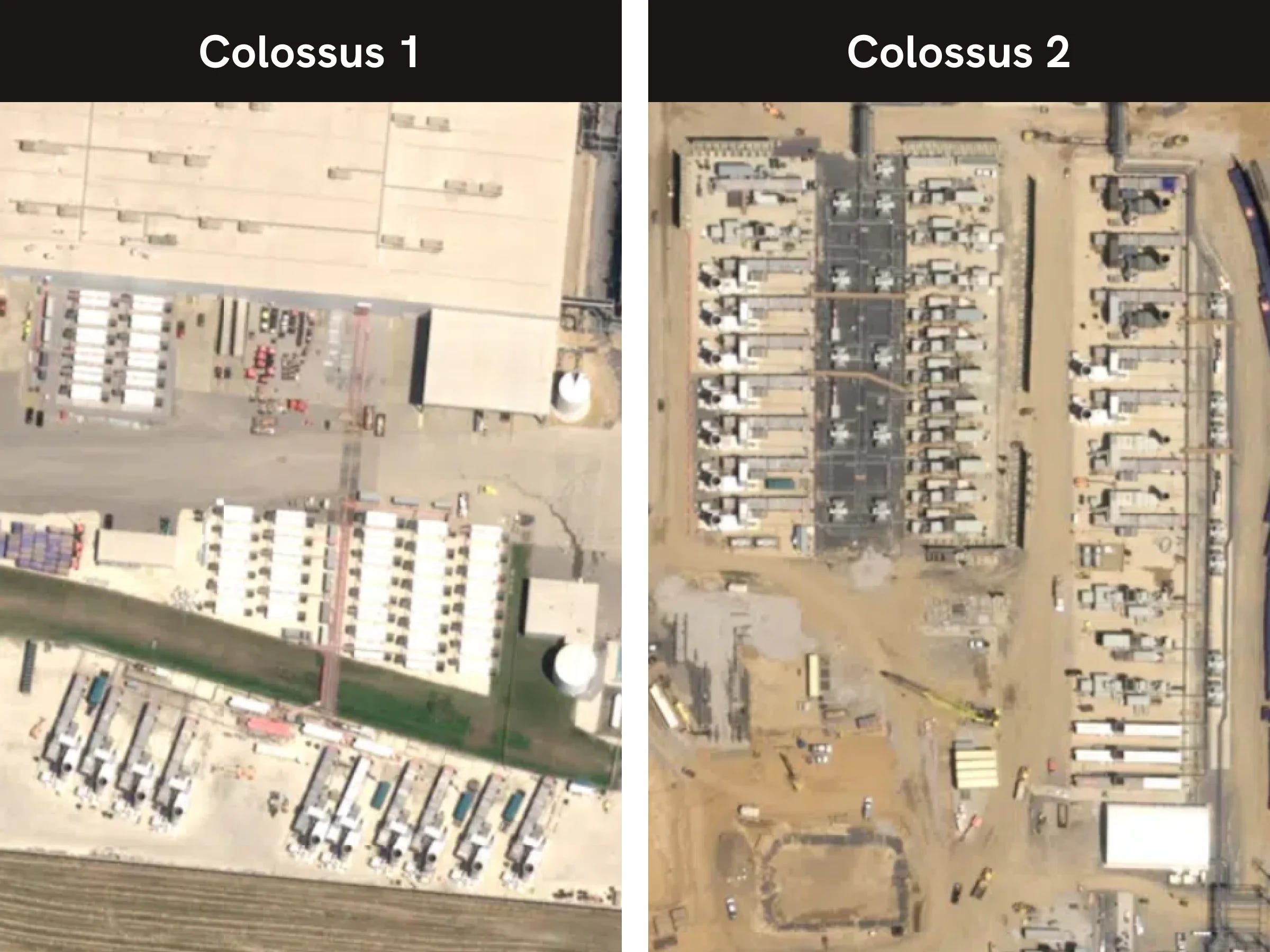
In the last 18 months, developers have built four behind-the-meter data centers with a combined capacity of 2 GW—equivalent to two nuclear power plants. The most notable projects are xAI’s Colossus 1 and 2 outside of Memphis. Since 2024, Elon Musk’s company has bought or leased dozens of mobile turbines. Today, these generators have a combined capacity of 1.5 GW—enough to make xAI’s data center the largest in the world.
Satellite images commissioned by Cleanview show nearly 60 turbines onsite across xAI’s two sites. Foundations have been laid for many more.
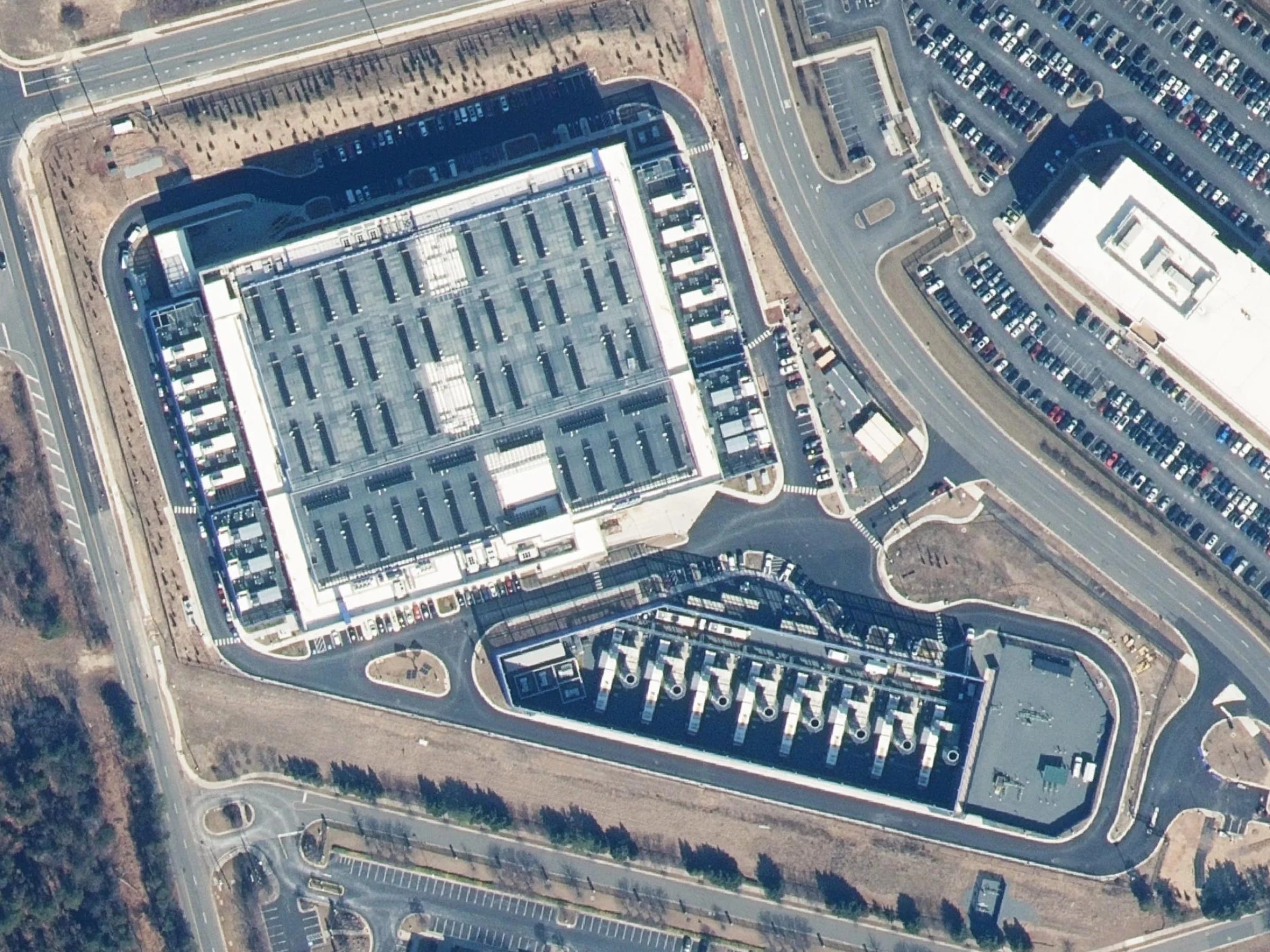
In Virginia, Vantage Data Centers has operated its own onsite power plant since September 2025. The company was told by the local utility that it couldn’t connect its data center for many years. Rather than wait, Vantage trucked in 8 Solar SMT-130 natural gas turbines.
Vantage’s turbines—which sound like jet engines, according to local residents who live as close as a few hundred feet away—currently operate at all hours of the day. Eventually Vantage plans to connect to the grid, but for now 100% of its power comes from the onsite power plant.
Using satellite images, I identified another 6 projects that are under construction and nearly complete. By the end of 2026, when these projects come online, the amount of behind-the-meter data center capacity will grow to 3 GW.
After 2026, the range of possible outcomes grows significantly. If all projects with signed tenants reach their construction timelines, then another 10 GW could come online in 2027. These projects, which include OpenAI’s massive Stargate data centers, would consume as much electricity as New York City.
It’s unlikely that all of these projects will finish on time. Permitting issues have already delayed behind-the-meter data centers across the country. Earlier this year one of OpenAI’s signature Stargate projects experienced a major setback when the State of New Mexico blocked a planned gas pipeline that would have fueled the project’s 2.45 GW onsite power plant. Satellite analysis suggests the project is likely to miss its target of coming online in 2027.
In New Jersey, Microsoft’s partner Nebius is struggling to obtain an air permit to run a 400 MW onsite gas power plant. The two companies signed a $17.4 billion deal in September 2025. The compute is scheduled to be delivered in 9 tranches, with 7 of them dependent on the onsite gas plant coming online in 2026.
In a scenario where many projects experience delays like this, cumulative behind-the-meter capacity could be as low as 5 GW by the end of 2027—compared to 13 GW if all projects with signed tenants meet their timelines.
Over the next few weeks I plan to publish more takeaways from this report in this newsletter. In the meantime, you can read the full report on Cleanview’s website. We’ve released both a free summary and a ~75-page paid version with a dataset of all the projects. We also have a discounted option for nonprofits and researchers.
Anyone know how to reach Michael?
The “how many will” question has a flip side: which ones can’t. Self-supply takes capital and a guaranteed buyer, which is why it’s Microsoft lining up a Helion reactor and not the median developer. The ones who can’t build their own plant stay on the shared grid, and that demand shows up on everyone’s bill. The self-builders quietly step off the shared tab, and the cost they’d have carried lands on the ratepayers who can’t leave.